At Lucy Zodion, sustainability has never been a bolt-on. Many of our products are designed to reduce energy use, cut emissions and support more sustainable infrastructure. But in 2021, we took an important step inward: looking at how we could reduce the environmental impact of our own operations.
As a busy site combining offices, manufacturing and warehousing at Sowerby Bridge, energy demand is constant. The solution was clear: invest in on-site solar generation.
Laying the foundations in 2021
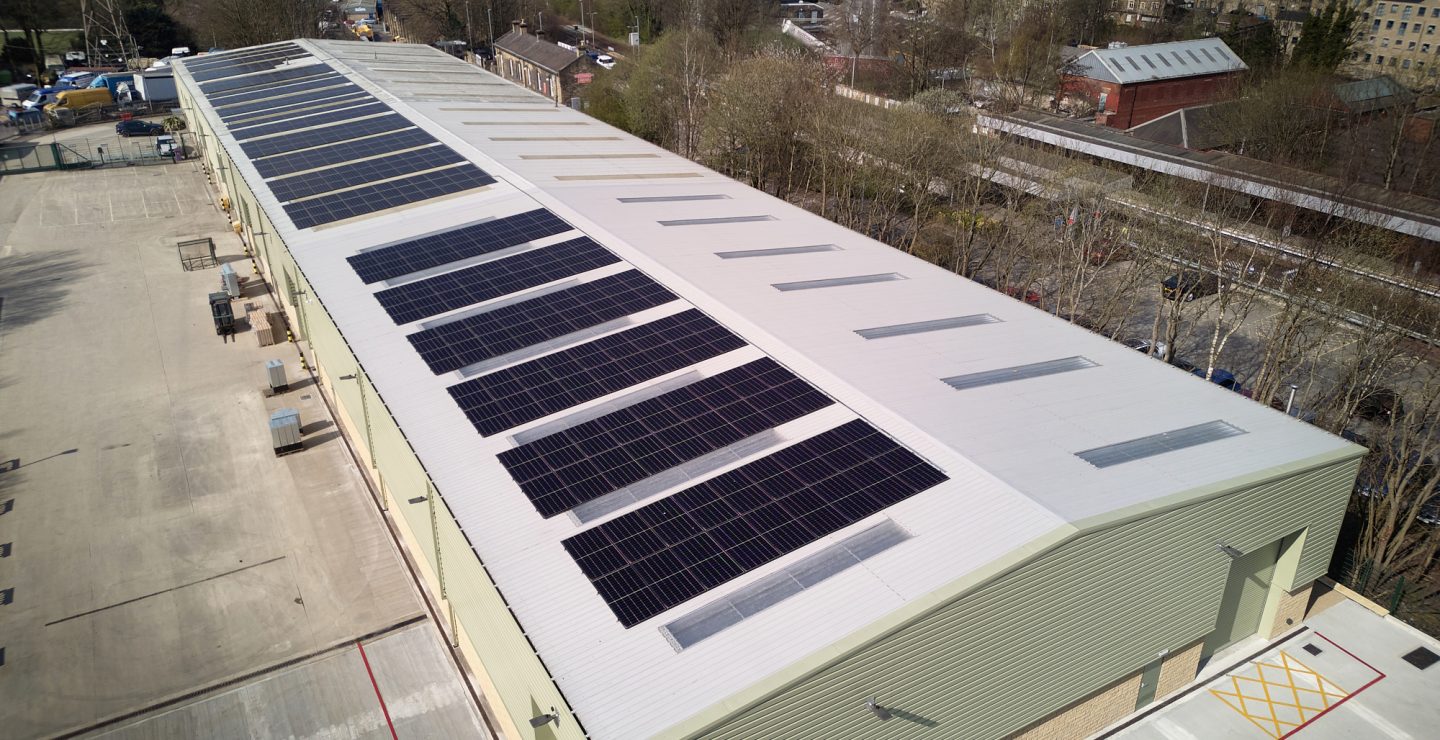
In October 2021, Lucy Zodion installed its first large-scale rooftop solar PV system at the Sowerby Bridge site. Over the course of a week, 334 solar panels were installed, forming a 110.2kWp system designed to make a meaningful contribution to the site’s energy needs.
At the time, the figures were compelling:
- Annual site energy consumption: 192,886 kWh
- Expected annual solar generation: 86,633 kWh
- Almost 50% reduction in reliance on grid electricity
More importantly, the project marked a clear commitment to reducing reliance on fossil fuels and becoming more self-sufficient as a business, sending a strong message to employees, customers and stakeholders that sustainability is embedded in how we operate, not just what we deliver.
Building on success with additional solar capacity
That initial investment laid the groundwork for further progress.
As the site evolved, Lucy Zodion expanded its on-site solar generation in 2024, adding a further 108 PV panels as part of wider site improvements. This brought the total installation to 442 solar panels, with combined annual generation now reaching approximately 131,000 kWh.
Rather than a one-off project, solar power at Sowerby Bridge has become a growing asset, scaled deliberately to support real operational demand.
What the data is now telling us
Recent performance data clearly shows the impact of this additional capacity.
Compared with the same period in 2024, on-site PV generation in 2025 has increased significantly month by month, particularly through the spring and summer. This uplift is not just theoretical, it is directly translating into how the site operates.
Alongside higher generation, Lucy Zodion has seen a marked increase in the number of working hours where the site operates at zero grid consumption. During peak months, off-grid operating hours have more than doubled year-on-year.
This means:
- More daily operations powered entirely by renewable energy
- Reduced dependence on grid electricity
- A measurable reduction in operational carbon impact
Designed for real-world performance
What’s particularly encouraging is how closely solar generation aligns with actual working patterns on site. Rather than exporting surplus energy or under-utilising generation, the expanded PV array is enabling high levels of self-consumption during core operational hours, exactly where it delivers the greatest benefit.
This reflects a practical, data-led approach to sustainability, focused on outcomes rather than headline figures.
A long-term commitment, not a tick-box exercise
The story of solar at Lucy Zodion didn’t start in 2021 and end here.
From the original rooftop installation to expanded capacity and increasing off-grid operation, this is a journey of continuous improvement. Each step builds on the last, guided by performance data and a long-term commitment to reducing environmental impact.
Solar power is one part of a wider programme of action as we work towards becoming a more climate-positive business, in how we manufacture, how we operate and how we plan for the future.